Hanover Townhouses for Sale and Easier Living
May 7, 2026
Real Estate Guidance
May 7, 2026
Real Estate Guidance
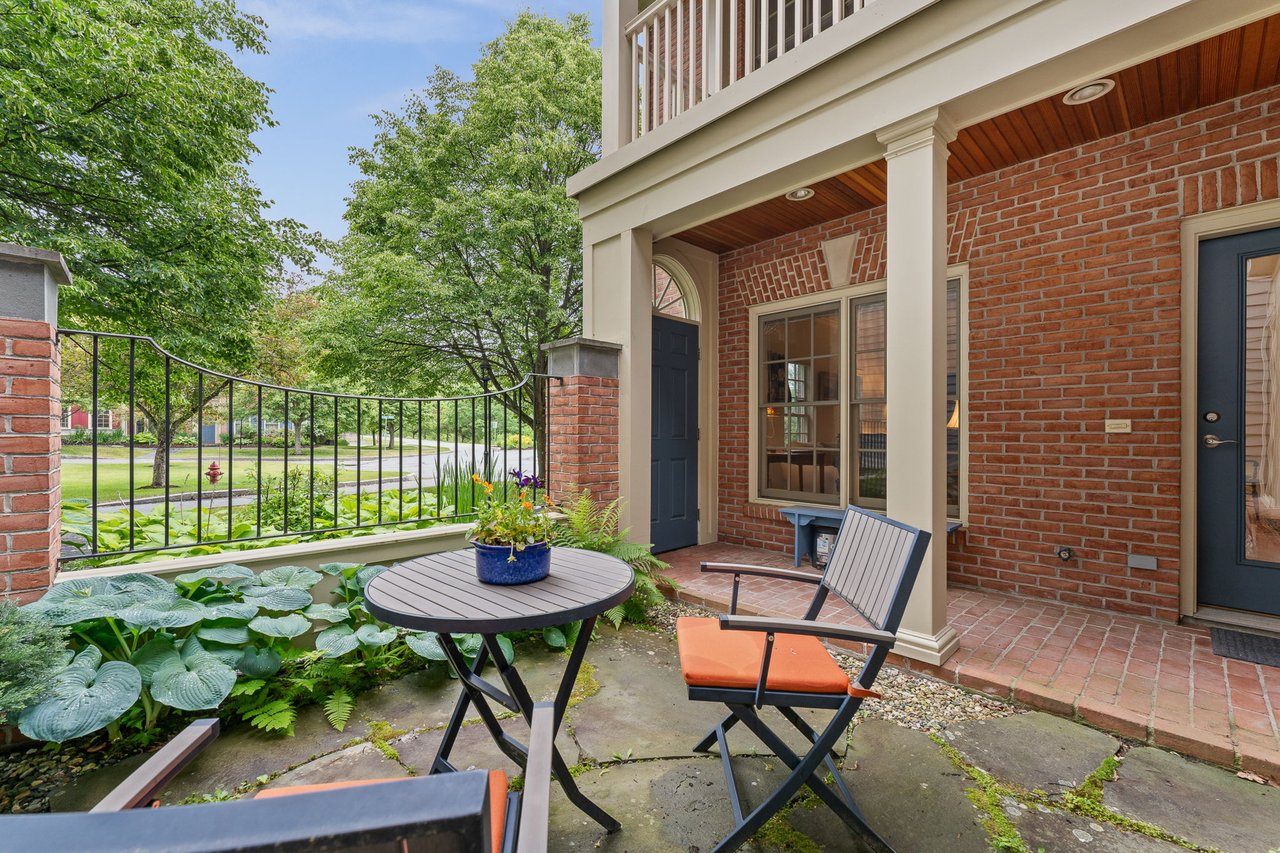
If you want a home base in Hanover that asks less of your time, townhouse living deserves a close look. Many buyers want to stay near downtown, Dartmouth, DHMC, and the trail network without taking on the full maintenance of a detached house. The good news is that Hanover’s planning, housing goals, and existing townhouse-style communities all support that easier, more compact way of living. Let’s take a closer look.
Hanover is designed in a way that naturally supports a townhouse lifestyle. The town’s downtown planning emphasizes a compact commercial center, housing close to downtown, pedestrian activity, and less dependence on the car. That matters if you want a home that lets you get to daily destinations more easily.
Hanover is also improving the experience of moving around town on foot or by bike. The South Main Street redesign is intended to improve conditions for pedestrians, cyclists, shoppers, and downtown businesses. When you do need to drive, the town still provides over 600 metered spaces and a 289-space garage.
The town’s broader planning goals also help explain why townhouse living feels like such a natural fit here. Hanover places value on scenic preservation, open space, and a mix of residential styles. Instead of pushing large apartment-style development, the town is supporting more compact, house-scale housing forms in the right locations.
Hanover’s 2025 zoning ordinance created a House-Scale Residential Dwelling Overlay District. In that ordinance, a townhouse building is defined as a typically attached building with three or four single-family units. This reflects a local preference for neighborhood-scale housing rather than larger, more intensive forms.
The town has also said its goal is to expand middle housing through compact infill in water- and sewer-served neighborhoods. That policy direction responds to local housing constraints, including the fact that 94% of residential lots are still limited to one- or two-family by right, and 67% of renters are cost-burdened. For buyers, that means townhouse living is not just a market trend here. It is also aligned with Hanover’s long-term planning direction.
New three- and four-unit projects in this framework still require site plan review for issues like screening, parking, lighting, drainage, and landscaping. That review process matters because it helps keep new development compatible with its surroundings. If you value a home that feels connected to Hanover’s established character, this is part of the reason townhouse options can be appealing.
For many buyers, the appeal of a townhouse is simple. You usually get a smaller footprint, less exterior upkeep, and a layout that supports a busy schedule. In Hanover, that can be especially attractive if you want to be near work, campus, downtown services, or outdoor recreation.
Local townhouse-style examples often include features that support day-to-day ease. Common layouts in Hanover include two- and three-bedroom homes, 1.5 to 3 baths, and three levels of living space. Some also offer finished basements or lofts, private decks, covered parking, and dedicated storage.
That mix can work well for different goals. You may want a full-time residence with less maintenance, a second home with a lock-and-leave feel, or a smaller in-town base that keeps you close to Hanover’s core destinations. In each case, townhouse living can offer a practical balance between comfort and convenience.
One of the biggest benefits of townhouse living in Hanover is location. Some local examples have been marketed for their convenient in-town setting and walkable access to Main Street, The Co-op, Dartmouth, and DHMC. Another example noted a location within a mile of both Dartmouth College and Dartmouth Hitchcock Medical Center.
That kind of siting can have a real impact on daily life. A shorter commute can give you back time. Easier access to downtown can make errands, dining, and community events feel more manageable.
Hanover’s setting also adds to the appeal. The town’s planning vision supports housing close enough to downtown to encourage walking and strengthen the village center. Hanover also places strong emphasis on trails, open space, and outdoor recreation, and the Appalachian Trail runs right down Main Street.
Not every Hanover townhouse lifestyle is centered right in the village. Gile Hill shows a different version of compact living with access to parking, trails, and near-bus-service connections. It is a 21-acre mixed-income development with 120 units across 11 buildings, including 44 privately owned condominiums and 76 apartments.
Twin Pines Housing describes Gile Hill as offering 1- to 3-bedroom homes, onsite parking, and laundry hookups. A current listing also notes private exterior entry, visitor parking, and trail access into downtown and the wider recreation network. For buyers who want convenience without being directly on Main Street, that can be a useful alternative.
This variety matters because townhouse living is not one-size-fits-all. Some buyers prefer a more village-centered setting, while others want a little more separation with easy access back into town. Hanover offers examples of both.
If you are comparing a townhouse with a detached home, the core tradeoff is usually straightforward. A townhouse often gives you less yard space and less control over the exterior, but in return you may have lower maintenance demands, shared expenses, and a more compact layout. In Hanover, that tradeoff lines up well with the town’s planning goals for compact housing and neighborhood-scale design.
For many buyers, the question is really about how you want to spend your time. If you enjoy managing a larger property, a single-family home may still be the better fit. If you would rather simplify upkeep and focus on location, convenience, and flexibility, a townhouse may be the smarter choice.
This can be especially relevant for downsizers, busy professionals, relocators, and second-home buyers. A well-located townhouse can function as a comfortable home base without requiring the same level of property management as a detached house. In a market like Hanover, that can be a meaningful advantage.
In New Hampshire, many townhouses are legally organized as condominiums, so it is important to understand what that means before you buy. Under the New Hampshire Condominium Act, common areas and common expenses are legally defined. Association boards must adopt annual budgets, provide budget summaries, and hold a meeting for owners to consider ratification.
The law also allows special assessments, including emergency assessments approved by a two-thirds board vote. In some cases, limited common-area expenses can be specially assessed to the unit or units that benefit from them. That is why monthly condo fees should be viewed as part of a larger ownership structure, not just as a simple extra payment.
In practical terms, those fees often support reserves, common-area maintenance, and shared services. Whether that feels like a good trade depends on the community, its documents, and how well the association plans for future costs. The easier lifestyle is real, but it works best when the numbers and rules make sense for you.
Before you decide that a Hanover townhouse is the right low-maintenance option, take time to review the details carefully. The legal obligations come from the condominium documents, not just from the building style. Two homes may look similar on the outside but offer very different ownership experiences.
A careful review should include:
If rental flexibility is important, that deserves extra attention. Hanover requires rental registration and inspection for residential rentals, so buyers should understand both community rules and local requirements before making plans.
When you compare a townhouse with a detached home, make sure you look at the full monthly and annual cost picture. Condo fees and property taxes are separate line items. One does not replace the other.
Hanover’s 2025 revaluation updated property values to market value as of April 1, 2025. The 2025 base tax rate is $12.78 per $1,000 of assessed value, or $13.30 to $13.91 in the three fire districts. Those numbers are important when you are weighing the true cost of townhouse ownership against other housing options.
Inventory for townhouses in Hanover is limited. Realtor.com currently shows just 3 townhomes for sale in Hanover, while the broader Hanover market has 28 active listings and a median listing home price of $1.26 million. In a market this tight, the right opportunity may not stay available for long.
That is one reason buyers benefit from focused local guidance. Not every townhouse option offers the same level of convenience, privacy, financial structure, or long-term fit. When inventory is constrained, clear criteria and quick decision-making become even more important.
Townhouse living in Hanover can be an excellent choice if you want a simpler ownership experience without giving up access to the things that make this town special. If you are weighing an in-town condo, a village-adjacent community, or a detached home, working with someone who understands the differences at the neighborhood level can help you choose with confidence. When you are ready to talk through your options in Hanover, connect with Alan DiStasio for thoughtful, local guidance.
Stay up to date on the latest real estate trends.
September 10, 2026
September 3, 2026

August 27, 2026
August 6, 2026
Life In The Upper Valley
August 6, 2026
Life In The Upper Valley
July 23, 2026
Market Intelligence
July 16, 2026
July 9, 2026
Real Estate Guidance
July 2, 2026
Get assistance in determining current property value, crafting a competitive offer, writing and negotiating a contract, and much more. Contact me today.