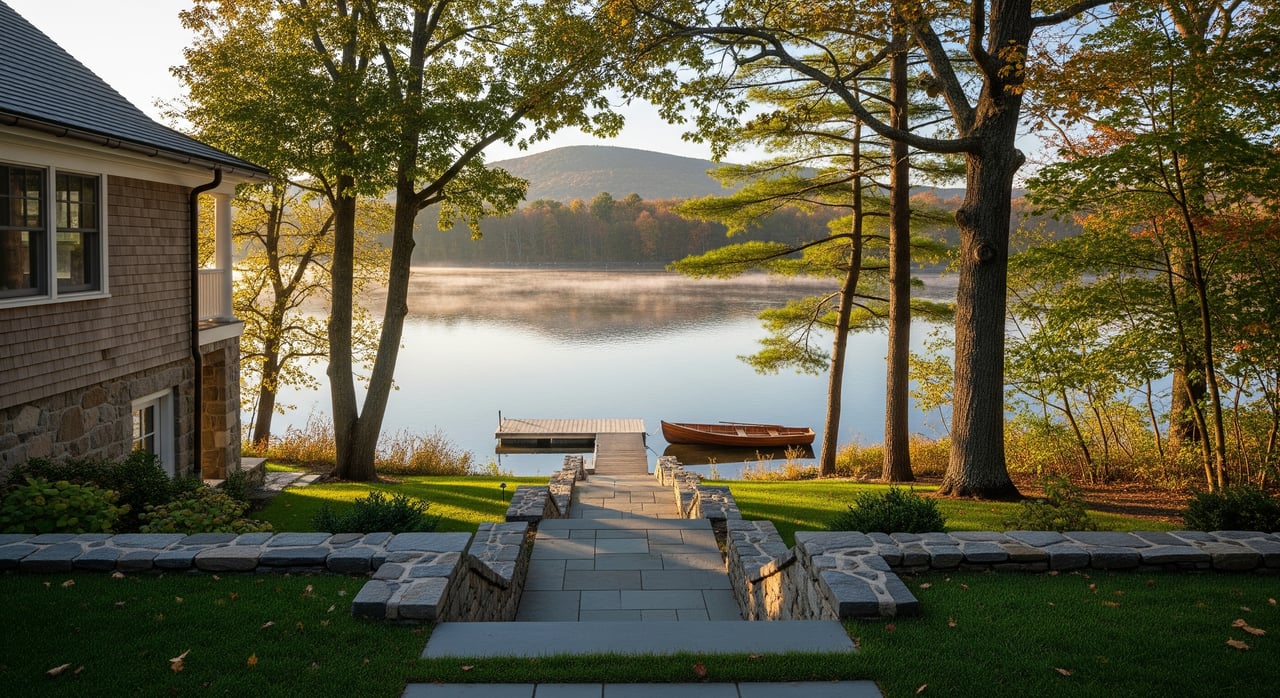
Picture this: your Lyme home with a quiet path to the Connecticut River or a shared spot on Post Pond. It sounds simple, but “deeded river access” can mean very different things from one property to the next. As a buyer, you want to know exactly what rights you are getting and how to protect your plans for swimming, boating, or a future dock.
In this guide, you will learn what deeded access typically covers in Lyme, how it differs from true waterfront ownership, what to look for in the deed, and the permitting landscape in New Hampshire. You will also get a practical, step‑by‑step checklist and smart questions to ask before you offer. Let’s dive in.
What deeded river access means in Lyme
“Deeded access” usually means your property benefits from a recorded easement that lets you cross another parcel to reach the water. The easement should appear in the recorded chain of title. It gives you a legal right to use the defined area, but it does not give you ownership of the shoreline or the riverbed unless the instrument specifically says so.
In Lyme, deeded access to the Connecticut River or Post Pond is often set up in one of three ways:
- Appurtenant easement. This runs with a specific parcel and transfers when the parcel sells.
- Easement in gross. This benefits a person or organization, not a parcel, and may not transfer automatically at closing.
- Recorded license. Less common and potentially revocable if not structured as a true easement.
Each format carries different risks and transfer rules. That is why verifying the type and exact language is essential.
Deeded access vs. true waterfront ownership
Owning “waterfront” usually means your deeded boundary touches the shoreline and you have riparian rights that attach to that land. Deeded access is different. It gives you the right to reach and use the water area as allowed by the easement, but it does not make you the shoreline owner.
Key differences to understand:
- Right to exclude others. The shoreline owner typically controls who can be on the shore, not the deeded‑access holder.
- Dock or structure rights. Permanent structures, such as docks or boathouses, usually require explicit rights in the easement plus state and local permits. You may also need the shoreline owner’s consent.
- Recreation in the water. Fishing, navigation, and swimming are governed by state rules and common law. Your easement rights, the shoreline owner’s rights, and permitting rules may limit specific uses.
If your goal includes a dock, mooring, or long‑term boat storage, you will need clear easement language and the proper approvals.
How to read the easement language
The recorded document is your playbook. Ask for the Book and Page number or Document ID, pull the full instrument, and read it closely. Small words can have big consequences.
Common phrases and what they mean:
- “Perpetual, non‑exclusive easement for ingress and egress.” This usually covers walking access, and sometimes driving, but does not grant you sole use. Others may share the route.
- “Appurtenant to Lot X and shall run with the land.” The benefit ties to the parcel, not the person, and should transfer with the property.
- “Exclusive right to moor one boat and to construct a seasonal dock, subject to all permits.” Docking may be allowed if you secure state and local approvals.
- “Grantee shall be responsible for maintenance and repair.” You, and sometimes other benefitted owners, may pay for upkeep, insurance, and repairs.
Rights that often need clarity
Look for specific language on these points:
- Pedestrian vs. vehicular access, and any reference to parking.
- Seasonal use limits, hours, or guest use.
- Improvements, such as stairs, ramps, bank stabilization, or storage racks.
- Cost sharing and who manages maintenance or assessments.
- Term or termination, including any use‑it‑or‑lose‑it clauses.
If any item is silent or vague, plan to investigate further before you commit.
Permits and local oversight in New Hampshire
Using an access easement is one thing. Building or altering anything near the shore is another. New Hampshire has a permitting framework you should understand early.
- State review. The New Hampshire Department of Environmental Services (NHDES) typically reviews shoreland work, wetlands impacts, and structures in or over the water. Docks, bank stabilization, and wetland impacts often require permits or notifications.
- Federal involvement. Work in navigable waters, including parts of the Connecticut River, may require review by the U.S. Army Corps of Engineers.
- Town of Lyme. Zoning may set shoreland setbacks or additional standards for structures near Post Pond or the river. The Lyme Town Office and Conservation Commission can help you understand local requirements and any past approvals.
- Conservation easements. A separate conservation easement on the shoreline parcel can add restrictions that go beyond a typical access easement.
Docks and shoreline structures
Two things must align for a dock to be possible: the easement must grant the right to build or place a dock, and you must obtain all required permits. If the easement is silent on docks or prohibits structures, a permit alone will not create the right to build. Confirm past permits, status of prior approvals, and any enforcement history.
Due‑diligence checklist for Lyme buyers
Treat deeded access as a legal and physical asset you must verify on paper and on the ground. Use this checklist to organize your review.
Legal and title
- Order a full title report with copies of all recorded instruments referenced in the chain, including easements, rights‑of‑way, covenants, and maintenance agreements.
- Confirm whether the access is a recorded easement, and whether it is appurtenant or in gross. Verify Book and Page or the Document ID and review the original instrument.
- Check whether the easement is exclusive or non‑exclusive, perpetual or term‑limited, and whether it runs with the land.
- Look for language on improvements, parking, stairs, docks, and any termination conditions.
- Ask whether title insurance will insure the easement and what exceptions will apply.
- Identify the shoreline owner and whether that owner has granted access to others.
Physical and survey
- Hire a New Hampshire‑licensed land surveyor to map the easement location, width, and path to the water.
- Walk the access route. Note slopes, wetlands, erosion, stairs, and the condition of any improvements.
- Check for obstructions, such as locked gates, fences, or encroachments.
- Confirm whether vehicular access and parking are included, or if access is pedestrian only.
Regulatory, permits, and environment
Document any existing structures, such as docks, moorings, ramps, or retaining walls, and verify permit history.
Consult NHDES for permit needs related to docks, bank work, or other shoreline changes. For the Connecticut River mainstem, confirm whether federal review applies.
Visit the Lyme Town Office and speak with the Conservation Commission about shoreland setbacks, local approvals, and any conservation conditions.
Check FEMA flood mapping to understand flood hazard exposure and design implications for shoreline structures.
Financial and practical
- Obtain maintenance agreements and recent invoices for plowing, repairs, or shared upkeep.
- Confirm liability and insurance requirements related to the access, including any indemnity obligations.
- Ask about past disputes, complaints, or attempts to revoke or limit the easement.
- Consider resale implications if the easement is non‑exclusive, seasonal, or limited in scope.
Red flags and where to negotiate
Be alert for issues that can derail plans or create future conflict. If you see these, slow down and seek clarity.
- Unrecorded or verbal promises of access. These can be revoked and should not be relied on without proper documentation.
- Ambiguous use language. Vague references to “ingress and egress” can leave parking, vehicle use, or guest access unclear.
- No maintenance mechanism. If the document says owners will agree later on costs and there is no process to collect funds, disputes are likely.
- Easement that can be modified or revoked by the servient owner. Seek a clear, perpetual appurtenant easement.
- Explicit prohibition on structures where you want a dock. If your plans include a dock, negotiate the document and confirm permitting feasibility before you buy.
- Physical impracticality. Steep slopes, wetlands, or erosion may make the route difficult to use and may limit improvements.
Smart questions to ask before you offer
Use these questions to focus your diligence and negotiations:
- Is the access easement recorded? What is the Book and Page or Document ID?
- Is it appurtenant to the parcel I am buying, or personal to the current owner?
- Is the easement exclusive? Who else can use it and for what purposes?
- What uses are allowed and what is prohibited? Does it mention parking or docks?
- Who pays for maintenance, plowing, and repairs, and how are costs allocated?
- Has anyone challenged the easement or tried to limit it in the past?
- Are there permits, existing docks, or prior approvals? Can I review copies?
- Who owns the shoreline parcel and how do they manage access?
Resale and value considerations
Deeded access can enhance lifestyle and market appeal, but the details matter. A non‑exclusive, pedestrian‑only path may be less valuable than exclusive access with clear parking and docking rights. Buyers often place a premium on certainty, which means clean documentation, mapped access, and a straightforward maintenance plan.
If you expect to use the access for boating or with guests, confirm those rights now. Solid records and permits can make your future resale smoother and more attractive to the next buyer.
Work with local experts
A strong team can turn a complex review into a confident purchase. In Lyme and across New Hampshire, consider bringing in:
- A New Hampshire real estate attorney to interpret the easement, evaluate risk, and align your plans with the document.
- A licensed surveyor to confirm the exact route, width, and conditions on the ground.
- The title company to advise on insurability and any exceptions.
- NHDES staff to outline what approvals are required for docks or shoreline work.
- The Lyme Town Office and Conservation Commission for local zoning, setback standards, past approvals, and conservation constraints.
- Local land trusts or conservation holders to understand any conservation easements that affect the shoreline parcel.
When your goal is a seamless closing and long‑term enjoyment of the water, careful diligence is the surest path forward.
Ready to evaluate a property with deeded access in Lyme or nearby Upper Valley towns? For thoughtful buyer representation and clear guidance from search to closing, connect with Alan DiStasio.
FAQs
What does “deeded river access” mean for a Lyme, NH home?
- It typically refers to a recorded easement that lets you use a defined route over another parcel to reach the water, but it does not give you ownership of the shoreline or riverbed.
How is deeded access different from owning waterfront in New Hampshire?
- Waterfront owners usually have riparian rights tied to the land that touches the shore, while deeded access grants use rights without shoreline ownership or automatic rights to build structures.
Can I build a dock with deeded access on the Connecticut River or Post Pond?
- Only if the easement explicitly allows a dock and you obtain all required permits, which often include NHDES review and, in some cases, federal or local approvals.
How do I confirm whether the easement runs with the land I am buying?
- Review the recorded instrument for language stating it is appurtenant to the parcel and perpetual, and verify the Book and Page or Document ID with the title company.
What should I check about parking when a listing advertises deeded water access?
- Look for specific language that permits vehicular access and parking, confirm the physical space on site, and verify any shared maintenance rules or restrictions.
Who maintains the access path if several Lyme properties share it?
- Check the recorded maintenance agreement for cost sharing and responsibilities; if none exists, ask for past invoices and verify how owners have handled upkeep.
What local offices can help me verify permits or restrictions near the water?
- Contact NHDES for state permitting, the Lyme Town Office and Conservation Commission for local zoning and shoreland standards, and the Grafton County Registry of Deeds for recorded documents.