Hanover's Zoning Fight Just Ended. Here's What It Changes for Your Lot.
September 17, 2026
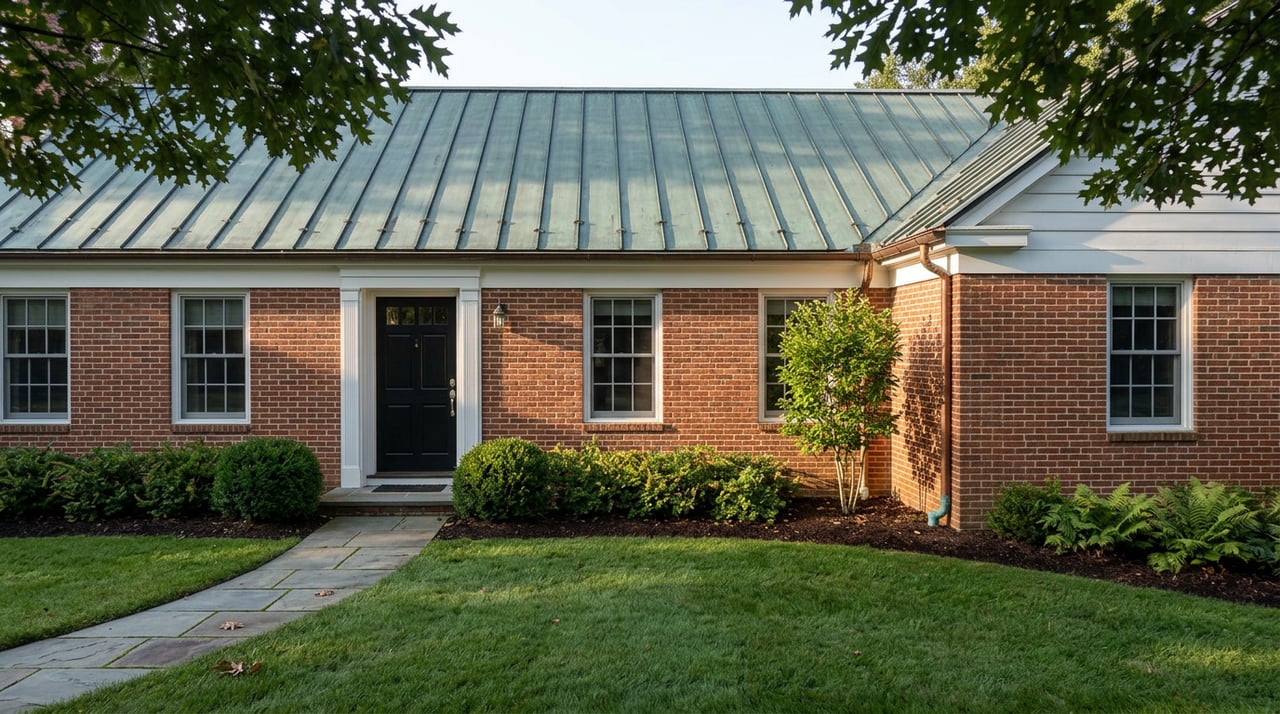
September 17, 2026
On a Wednesday morning in April, Hanover resident and developer Jolin Kish sat for an interview at her home on Ledyard Lane, the house she built in 2015 for herself, her two kids, her father and her grandmother, with an apartment over the garage for extra rental income. Her grandmother passed away last November. Her father moved next door. Her daughter left for college. Kish still wanted to convert the basement kitchen and living space into a second apartment, turning the property into a triplex. At a Planning Board meeting, a resident named McDevitt asked her a pointed question: if the building became a triplex, and some of those bedrooms were rented separately, how many total bedrooms would be under that one roof? Eleven, she said.
The board didn't have a clean answer for what came next. The town's own zoning overlay caps a triplex or fourplex at 45 feet by 45 feet, but Kish's existing structure measures 50 by 37, a shape that fits the rules for a duplex but not, on paper, for a triplex. Board Chairwoman Beth Esinhart acknowledged the gap at the meeting: "The ordinance, I think, is silent on it." The board sent the question to legal counsel rather than rule on the spot, because whatever they decided would set a precedent for every similar house in town.
That's the sentence worth sitting with if you're comparing Hanover to anywhere else in the Upper Valley right now. A house's zoning district, not its square footage or its finish level, may be the single biggest variable in what it's actually worth to a buyer with an eye on rental income or a future in-law suite. And as of this spring, that variable is more unsettled than most listing sheets let on.
In 2025, Hanover voters approved a package of zoning changes creating what the town calls the House-Scale Residential Overlay, a rule allowing duplexes, triplexes and fourplexes by right in parts of town served by municipal water and sewer, districts that had previously permitted only one or two units per lot. The article passed 703 to 575.
This spring, Hanover architect Randy Mudge collected roughly 80 signatures and forced a repeal vote onto the 2026 Town Meeting warrant as Article 7. His argument was that the density didn't match the neighborhoods it landed in and wouldn't actually lower housing costs the way supporters promised. The Hanover Planning Board reviewed his proposal in March and voted 5 to 1 against it. Then it went to the voters anyway, as petitioned articles do.
On May 12, at Hanover High School, Article 7 failed. One resident who supported denser housing, Bob Snyder, put his reasoning to a reporter outside the polls in plain terms:
"I don't want this to be essentially a gated community."
A former town manager of 22 years, Julia Griffin, now with the affordable housing nonprofit Twin Pines Housing Trust, voted against Article 7 too. Not everyone agreed. Government professor emeritus Linda Fowler voted for it, worried about what comes after construction wraps: "What's going to happen is that people are going to be parking on front lawns and blocking driveways," she said.
The margin was narrow enough that this is not a settled argument, only a settled vote. For now, the overlay stands.
The rule itself is more specific than most zoning conversations get. A house-scale residential dwelling is capped by dimension, not just unit count, so that new density stays visually consistent with the block it sits on.
| Building type | Maximum footprint |
|---|---|
| Single-family | 35 ft x 35 ft |
| Duplex | 40 ft x 48 ft |
| Triplex or fourplex | 45 ft x 45 ft |
Lot size minimums apply on top of those caps: 5,000 square feet in the GR district, 6,500 square feet in SR and RO. Three and four unit buildings also trigger a full site plan review, where the Planning Board weighs parking, lighting, drainage and screening before anything gets built.
None of that shows up in a listing description. A buyer touring two similar looking colonials on adjoining streets has no obvious way to know that one sits in a district where the owner could add a legal second or third unit and the other doesn't, unless they ask the town directly which zoning district the parcel falls under and whether it's inside the overlay's water and sewer service area.
Grafton County's median sale price reached $490,000 in March 2026, up 15.6 percent from the year before, according to New Hampshire Realtors data reported by The Dartmouth. That sounds like a single, clean signal. It isn't. New Hampshire Realtors vice president Dave Cummings cautioned that county level numbers move around because the sample size is small month to month, calling them "a little more volatile" than a real trend line.
Hanover skews well above that county figure, and has for years, driven by proximity to Dartmouth College and Dartmouth Hitchcock Medical Center. But a single median obscures the exact thing that matters most right now: whether the parcel behind that price tag carries development rights that didn't exist before 2025. A $1.1 million single-family house in a GR or RO district with overlay eligibility isn't competing on the same terms as a $1.1 million house in a district untouched by the change. One may support a legal accessory apartment or a small multi-unit conversion down the road. The other, for now, doesn't.
This is also why the Dartmouth housing story and the Hanover housing story are really one story. The same 2025 zoning math that let Kish consider a third apartment on Ledyard Lane is what made Dartmouth's Russo Hall pencil out, a 290-bed dormitory on West Wheelock Street scheduled to open this September. It's one piece of a pledge Dartmouth president Sian Leah Beilock made in 2023 to add 1,000 dormitory beds by 2033, a goal the college says it's on track to complete. When a college with that kind of institutional weight tells you the zoning is the reason a project finally worked, it's worth taking seriously as a signal for what the same rule means for a private homeowner's lot.
The Ledyard Lane dispute matters beyond one house because it exposes a gap in the ordinance that hasn't been closed. If the board eventually rules that dimensional caps apply retroactively to existing buildings, older homes that are larger than the 45 by 45 triplex cap may be locked out of the densest use the overlay otherwise allows, even if they sit in an eligible district. If the board rules the caps only govern new construction, plenty of existing large homes in Hanover's overlay districts could have more redevelopment headroom than most buyers currently assume.
Neither answer is settled. That uncertainty is itself useful information for anyone shopping in Hanover this year, because it means the value of "overlay eligible" isn't fixed. It's a live legal question with a real house and a real family at the center of it.
A few questions to put directly to the listing agent, the seller, or the town's Planning, Zoning and Codes office before you get too far into a Hanover transaction:
None of this makes Hanover a better or worse choice than Norwich, Lyme, or Lebanon. It makes Hanover a town where the zoning map now carries more weight in a purchase decision than it did two years ago. A buyer weighing Hanover against a similarly priced property in a neighboring town should ask the overlay question specifically in Hanover, because that particular mechanism doesn't exist the same way just across the river or up the road. It's a local variable, not a regional one, and it's the kind of detail that only shows up when someone is tracking the town's own Planning Board minutes rather than a national portal's price chart.
Zoning ordinances change again, and this one nearly did this spring. Anyone using overlay eligibility as part of their reasoning for a purchase or a listing price should confirm the current status directly with Hanover's Planning, Zoning and Codes Department rather than relying on last year's news coverage, including this one. Ask for the parcel's zoning designation in writing and ask whether any site plan applications are pending nearby that might signal how the Ledyard Lane question eventually gets resolved.
Does every house in Hanover qualify for the overlay? No. Eligibility depends on the specific zoning district and whether the parcel is served by municipal water and sewer. The overlay does not apply to Hanover's rural, non-serviced areas.
Did the May 2026 vote change anything for homes already built as duplexes or triplexes? The vote decided whether the 2025 rules stay in place going forward. It did not resolve the separate question raised by the Ledyard Lane case, which is whether size caps apply to existing buildings being converted rather than new construction.
Could this overlay be repealed in a future Town Meeting? It's possible. Article 7 failed by a narrow enough margin that another petitioned article could return in a future year. Anyone weighing a purchase around this rule should treat it as current, not permanent.
If you're comparing Hanover against other Upper Valley towns and want a clear read on how a specific property's zoning district affects its long-term value, Alan DiStasio can walk you through what a parcel actually allows before you write an offer. Request a complimentary market assessment to start that conversation.
Stay up to date on the latest real estate trends.
September 17, 2026
September 10, 2026
September 3, 2026

August 27, 2026
August 6, 2026
Life In The Upper Valley
August 6, 2026
Life In The Upper Valley
July 23, 2026
Market Intelligence
July 16, 2026
July 9, 2026
Get assistance in determining current property value, crafting a competitive offer, writing and negotiating a contract, and much more. Contact me today.